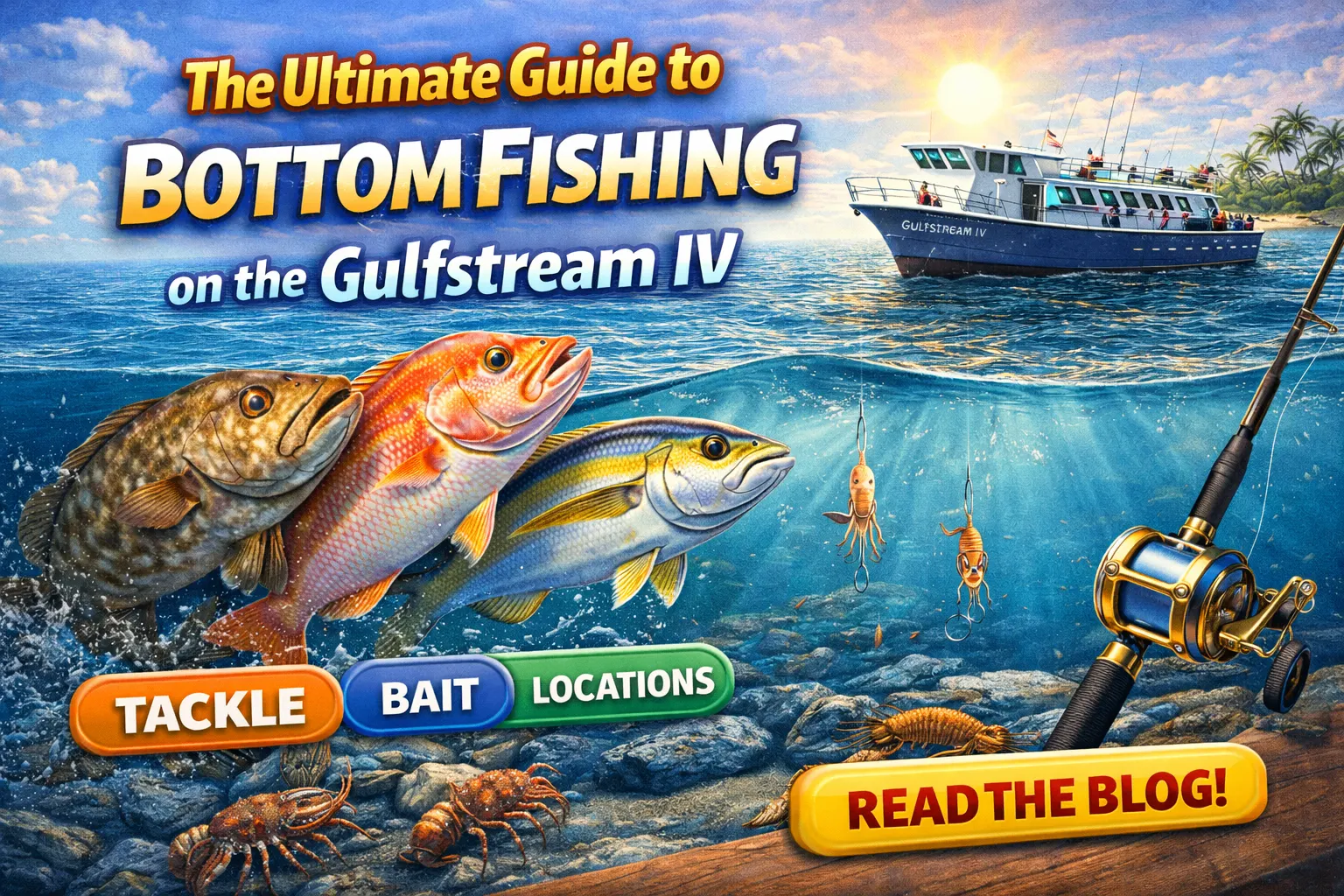
Key West Bottom Fishing: How It Works
By Jamie Snediker · Updated August 28, 2026
Bottom fishing is what we do out of Key West, and it's the style of fishing most people picture when they imagine coming home with dinner. This guide explains how it actually works on our boat: where we go, how deep we fish, what we put on the hook, and what you can reasonably expect to catch.
Gulfstream has run fishing trips out of Key West for more than 75 years, and I've spent about 20 years working in this business myself. If you're curious about the boat's background, that's covered on our history page.
For what's been coming over the rail lately, see our Key West fishing report.
What Bottom Fishing Actually Is
Bottom fishing means fishing near the sea floor instead of dragging baits behind a moving boat. Fish gather around structure - reef, ledges, hard bottom and wrecks - because structure gives them shelter and something to eat. We put the boat over that structure and drop baited rigs down to them.
That's the whole idea, and it's why it works so well for people who have never fished before. There's no casting to learn and no technique to master. If you can drop a line down and reel it up, you can bottom fish.
How We Fish
Here's the normal shape of a trip:
- We run roughly 3 to 10 miles from the dock to reef, wreck and hard-bottom spots.
- We fish in about 20 feet to 100+ feet of water, depending on conditions, the captain and what we're after.
- We anchor over the structure rather than drifting across it, so you're fishing a known spot instead of covering water.
- Everyone bottom fishes from the anchored boat, and we use chum when conditions call for it to bring fish up behind the boat.
- If a spot goes quiet, the captain pulls the anchor and moves.
That's it. We don't troll, and we don't drift-fish - anchored bottom fishing is the program.
Bait and Tackle
Squid is our primary bait, with ballyhoo used as a secondary bait. We don't provide live bait. Once in a while the crew will catch some live bait during a trip, usually when the passenger load is light, but that's incidental and not something to plan your day around.
You'll fish a weighted bottom rig on conventional tackle. Bait, tackle and your Florida saltwater fishing license are included. Rod and reel rentals are available for $5 if needed.
Working the Bite
The crew walks you through it on the way out, but a few things separate the people who catch fish from the people who feed them:
- Keep light tension on your line. A slack line means you won't feel the bite.
- Fish just off the bottom. Lift the rig a couple of cranks up - fish tend to feed upward.
- Change tired bait. Fresh bait gets more bites.
- Don't hesitate. Snapper are expert bait thieves. When you feel a solid tap, lift the rod firmly and start reeling.
- Listen to the crew. They fish these spots every day.
What You'll Commonly Catch
Bottom fishing in Key West is a mixed-bag fishery, and the mix changes with the season and the conditions. On a normal day the deck sees a combination of the following:
Snapper
Yellowtail snapper are the backbone of the reef here - schooling fish, fun on light tackle, and outstanding on the table. Lane snapper and schoolmaster snapper are frequent company and make good eating too.
Mangrove snapper can show up throughout the year, but they become a more prominent part of the Gulfstream catch during the summer.
Mutton snapper are a heavier, warier fish that hold along reef edges. When one eats, you'll know it.
Grouper
Red grouper and black grouper live on the same wrecks and ledges we fish, and they eat a bottom bait hard and immediately head for the rocks. We encounter grouper on our bottom-fishing grounds, but whether a grouper can be kept depends on the current harvest season and regulations - see our Key West fishing regulations guide before you plan around keeping one. A closed harvest season doesn't mean the fish aren't there; it means they go back over the rail.
Grunts, Porgies and Margate
These are the steady-action fish, and they're better than their reputation. Grunts, porgies and margate bite readily, keep kids and first-timers busy all day, and fry up well.
Hogfish, Triggerfish and Cero
Hogfish and triggerfish are picky, occasional bonus fish rather than something we target. Cero mackerel often turn up in the chum slick behind an anchored boat on a flat line.
Barracuda show up now and then - incidental, not something we fish for.
For a fuller rundown of each species, sizes we actually see, and how they eat, read our Key West fish species guide.
ℹ️
No trip comes with guaranteed species. We fish what's biting on the day, and the crew will tell you honestly what the bite has been doing.
At the Dock: Cleaning Your Catch
When we return to the dock, our crew can clean and fillet your keeper fish for $0.50 per fish. Bring a cooler and we'll pack your fillets on ice.
Plenty of Key West restaurants will also cook your catch for you - that's the "hook and cook" arrangement, and the crew can point you toward the spots that do it well.
What to Bring
Worth having:
- Reef-safe sunscreen
- Sunglasses and a hat
- A cooler for your fillets (we have ice)
- Cash for tips
- Soft-soled, non-marking shoes
- A light jacket for the ride out
Leave at home: hard-soled shoes, and - fishing superstition being what it is - bananas.
⚠️
If you're prone to motion sickness: plan ahead. Motion-sickness medicines generally work best taken before symptoms start. We don't stock or provide medication onboard, so bring your own, check the Drug Facts label for the product you use and follow its directions, and ask your pharmacist or doctor if you have questions. More in our seasickness guide.
When to Go
We bottom fish year-round out of Key West. Winter fronts bring wind, and summer usually brings calmer water and heat, but there's no closed season on bottom fishing itself - only on individual species' harvest. For a month-by-month look at what we typically see, read our best time to fish in Key West guide.
Frequently Asked Questions
What is bottom fishing?
Bottom fishing means fishing near the sea floor rather than pulling baits behind a moving boat. We anchor over reef, wreck or hard-bottom structure, drop baited rigs down to the fish holding there, and fish that spot until the captain decides to move.
How deep do you bottom fish in Key West?
We normally fish in roughly 20 feet to 100+ feet of water, about 3 to 10 miles from the dock. The depth on any given day depends on conditions, the captain's read on the water and the species we're working.
What bait does Gulfstream use for bottom fishing?
Squid is our primary bait, with ballyhoo used as a secondary bait. We also use chum when conditions call for it. We do not provide live bait.
What fish can you catch bottom fishing in Key West?
Common catches include yellowtail, lane, mangrove, schoolmaster and mutton snapper, red and black grouper, grunts, porgies, margate, hogfish and triggerfish, with cero mackerel showing up in the chum slick. Nothing is guaranteed on any particular trip. Our full Key West fish species guide covers each one in detail.
Fishing This Way With Us
If you'd like to fish this way yourself, our Key West reef fishing trip is the trip that does it, and the party boat page covers the daily schedule, fares and what's included.
Ready to Experience Key West Fishing?
Book Your TripRead Next
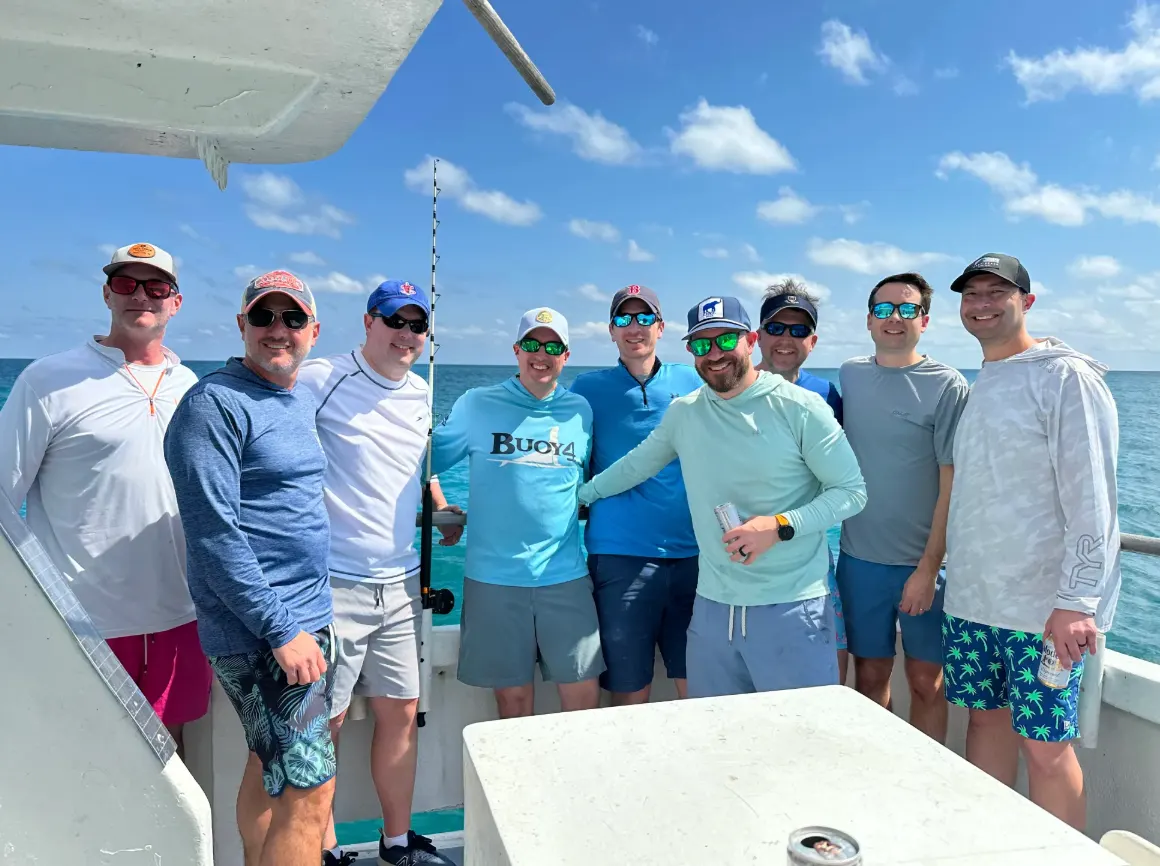
Reel in the Ultimate Bachelor Party on the Gulfstream IV!
Forget the same old bachelor party ideas—why settle for a crowded bar when you can party on the water, reel in monster fish, and celebrate like true legends aboard the Gulfstream IV?
Understanding Key West Fishing Regulations
Fishing in Key West, Florida, offers some of the best opportunities to catch a variety of fish. However, before you grab your rod, here's what you need to know.
How to Ship Fish Home from Key West | Packing, Flying & Shipping Guide
Learn how to ship your Key West fishing catch home via FedEx, UPS, or airplane. TSA rules for frozen fish carry-on, local packing services at Fins Dive Center, and why eating fresh is best.