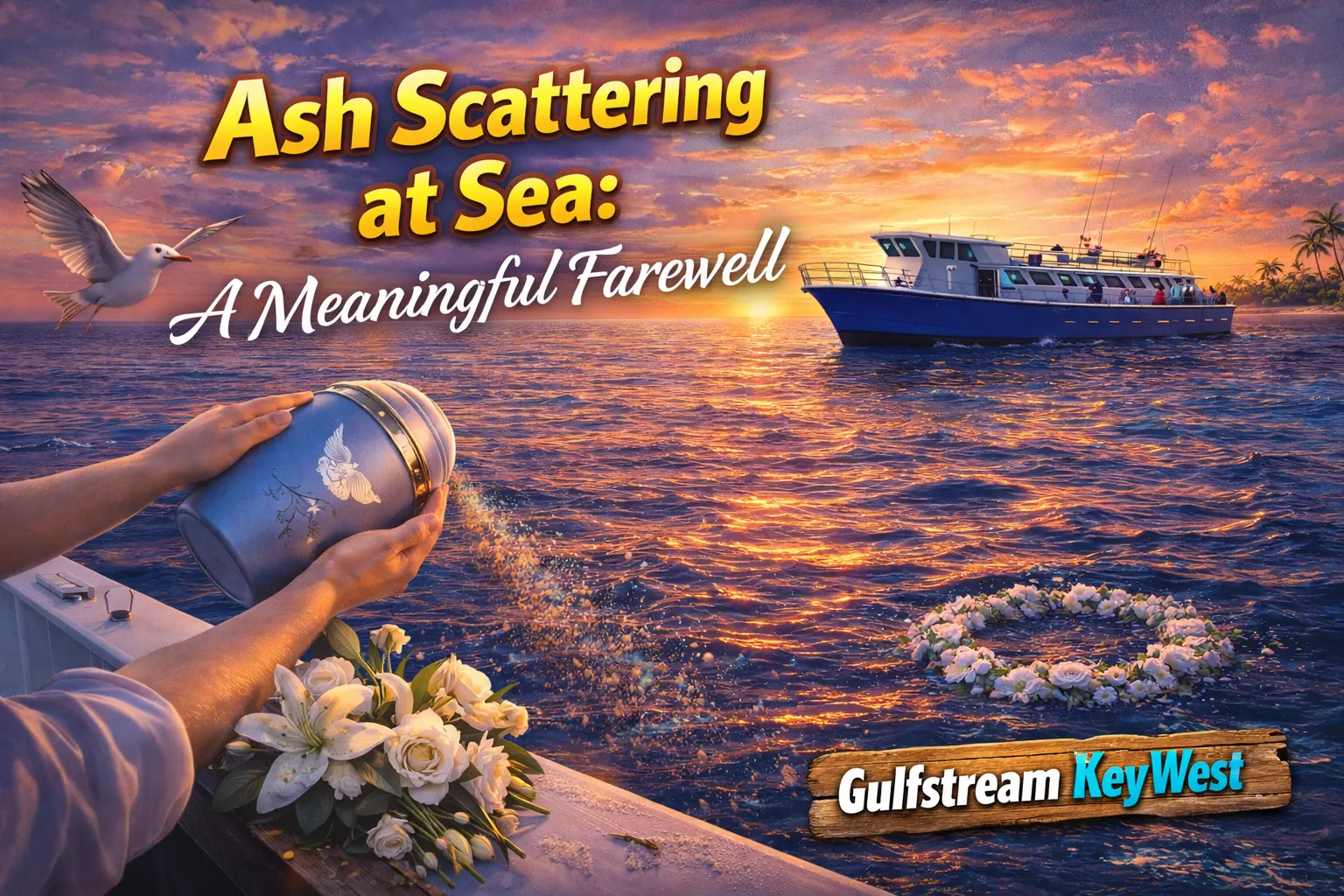
Ash Scattering at Sea: A Meaningful Farewell
Saying goodbye to a loved one is never easy, but for many families the ocean offers a sense of peace, eternity, and connection. Ash scattering at sea is a timeless tradition, symbolizing a return to nature and the vastness of the world beyond. This guide explains how an ocean scattering actually works, what to expect on the water, and how to prepare.
"The ocean has a way of bringing peace during difficult times. We're honored to be part of these meaningful moments." - Captain Jamie
Gulfstream's memorial charters depart from Key West, Florida. Families often travel to Key West from elsewhere in Florida and from across the country for the service. If you already know you want to arrange one, see our Key West ash scattering charter for current pricing, departure options and booking details.
What Is a Memorial Ash Scattering at Sea?
A memorial ash scattering at sea is a way to honor a loved one by releasing their cremated remains into the ocean. It is sometimes called a burial at sea, though that phrase can be confusing: scattering ashes involves cremated remains only, while a full-body burial at sea is an entirely different (and much more heavily regulated) service. Gulfstream's memorial charters are for cremated remains.
The ceremony takes place aboard a private charter boat in offshore waters - typically 3 or more nautical miles from shore, in keeping with federal guidelines for releasing cremated remains at sea.
ℹ️
Why Key West? Many families choose an ocean memorial in Key West because of the calm turquoise water, the sunsets, and the peaceful setting the Florida Keys provide. Whether your loved one was a lifelong fisherman, a beach lover, or simply felt at peace near the water, an ocean memorial can be a fitting and personal farewell.
What Happens During the Service
Most ocean scatterings follow a simple, unhurried rhythm:
1. Boarding at the dock. The crew helps everyone aboard and explains where to stand, where to sit, and how the release will work.
2. The ride offshore. Once the vessel reaches suitable offshore water, the captain slows and positions the boat so the release happens downwind - this matters more than most families expect.
3. The family's ceremony. Words, a reading, a prayer, a song, or simply silence. There is no required script.
4. The release. Ashes are released low and close to the water, often followed by flower petals.
5. A final circle and the ride home. Many families ask the captain to make a slow pass around the spot before heading back in.
💡
There is no wrong way to do this. Some families plan a full ceremony with a clergy member and printed programs. Others say a few words and watch the water. Both are completely appropriate.
How to Prepare
- Bring the cremated remains in a secure container. Crematory containers are fine. Nothing formal is required.
- Decide whether you are scattering only, or releasing a container too. If the container itself goes into the water, it must be biodegradable. A regular urn should stay aboard and go home with you.
- Keep the guest list settled in advance. Boats have fixed capacity limits, so an accurate head count matters for safety.
- Dress for a boat, not a chapel. Flat, non-slip shoes, layers, sun protection. Hats and loose papers can blow away.
- Plan for motion sickness. Offshore water off Key West is often calm, but if anyone in your party is prone to seasickness, take preventive steps before boarding and speak with a doctor or pharmacist about medication.
- Think about who will hold what. Assign someone to carry the ashes, someone to handle flowers, and someone to take photos if you want them.
What Can and Cannot Go Into the Water
This is the detail families most often get wrong when planning, so it is worth being clear.
Only biodegradable items may be released: cremated remains, natural flower petals, unwrapped fresh flowers, and biodegradable urns designed to dissolve in water.
⚠️
Not permitted in the water: plastic, glass, metal, artificial flowers, ribbon and wrapping, confetti, balloons of any kind - including so-called biodegradable balloons - and floating candles or water lanterns. Bringing an item aboard does not mean it can be released; anything that isn't biodegradable comes back to the dock with you.
Etiquette and Practical Planning Questions
Should we invite everyone? Ocean memorials tend to feel most intimate with the people closest to your loved one. Larger gatherings work, but a boat is a confined space and travel logistics multiply quickly.
Sunrise or sunset? Both are common. Sunrise tends to be calmer and quieter; evening services carry more visual drama. Pick the one that fits your loved one, not the photograph.
Do we need clergy? No. Families may bring their own clergy, officiant, or military personnel if they wish, but many services are led entirely by family.
Can we bring food and drinks? On a private memorial charter, families are generally welcome to bring their own food and beverages for the gathering.
What if we can't all travel? Some families choose to have the captain and crew perform the scattering on their behalf and receive the recorded coordinates afterward. It is a legitimate option when travel isn't possible.
What about veterans? If military honors matter to your family, ask about it while planning. Honors are coordinated separately rather than performed by a charter crew, and availability varies.
Records and Coordinates
Ask whoever runs your charter to record the location. On a Gulfstream memorial charter, families receive a Certificate of Burial at Sea by email with the exact GPS coordinates of the scattering location - so you can return to the same spot in the future, or simply know where it is.
Why the Ocean?
For those who loved the sea, or who want their memory to live on in something as vast and enduring as the ocean, scattering ashes offers closure and peace. The waters off Key West - clear, warm, and quiet in the early morning - make a fitting final resting place.
"There's something deeply comforting about returning a loved one to the sea. The ocean connects us all, and knowing they rest in these beautiful waters brings peace to so many families."
Ready to Arrange a Service?
When you move from understanding the process to actually planning a date, everything you need - price, duration, guest capacity, departure times and booking - is on our Key West memorial charter page. You can also text or call us at (305) 296-8494 and we'll walk you through it without pressure.
💡
Next step: See our Key West ash scattering charter →
Ready to Plan a Memorial Service?
Book Memorial CharterRead Next
Key West Fishing Tours: The Complete 2026 Guide
Everything you need to know about Key West fishing tours — from $69.95 party boat trips to private charters, what you'll catch, when to go, and how to book the best-priced trip in the Florida Keys.
Best Time to Fish in Key West: Month-by-Month Guide
The best time to fish in Key West depends on what you hope to catch. Here's what we typically see aboard Gulfstream month by month, from January through December.
10 Reasons Why You Shouldn't Miss Out on Fishing Party Boats in Key West
If you've ever considered booking a fishing charter in Key West, FL, you might be wondering if a fishing party boat is the right choice for you.